Saturday, 29 December 2012

Lighting

Lighting
Lighting is used in very productive ways as to how directors want audiences to view a particular scene or character. The key light is very bright and most influential. The back light helps to counteract the effect of the key light, however if there is no key light then back light creates a silhouette. The filler light softens harsh shadows which key light and back light create. Under lighting is used mainly in thrillers and horrors and comes from below the subject. Top lighting is used to create a glamorous look, maybe the women in thrillers or horror films or in Hollywood movies. The lighting comes from above and highlights features.


This is an example of an under light.


This is an example of a top light.

LOW KEY LIGHTING - this is created by using only key and back lights to produce sharp contrast of light and dark areas on the screen. Distinct shadows are formed due to this, and it is known as chiaroscuro.


HIGH KEY LIGHTING - this creates a more realistic feel and more filler lights are used. 

Tuesday, 25 December 2012

Unknown.

Unknown.

This film is a psychological thriller based on a man who wakes up from a coma in Berlin to discover that his wife doesn't know who he is. His briefcase has been left at the airport and he has no records or passport to prove who he is. He pays a private investigator to help him find out who his impersonator is and why, and makes a friendship with the cab driver who is an illegal immigrant. There is a huge fight at the end of this film and all is revealed.

I believe that this is a very good film with a clever plot. There are many different techniques used throughout the film to create the thriller and they are very effective.

Different camera shots are used in this film. Flashbacks are used throughout the film which I think is a good convention of a thriller and is very effective. This tells the story backwards.


Tuesday, 18 December 2012

Use of Sound.

Use of Sound.


There are different sound techniques used in films and videos including music, dialogue, silence and sound effects.

Diegetic sound- Sounds which belong to the actual film including voice of characters, objects which make sound, instruments used in music playing in the film. We can see this sound e.g. if we see someone getting shot we hear a shotgun.

Non-diegetic sound- Sounds which don't belong to the films world including dramatic effects. They are represented as coming from the source when in fact they are outside the story space. This also includes music.

Sound bridge- This is when a sound of the next scene begins before we see the image, and starts at the end of the previous scene. This introduces us into the next scene.

Silence in a film creates suspense and tension, and is used a lot in thrillers. It causes us to focus more on the image to know what's going on, and then shock is used to make us jump with something jumping out in the screen or something very unpredictable happening. Dialogue in a film really sets the story and tells us about those particular characters. We can analyse their use of language and their accent to determine who they are. 

Thursday, 13 December 2012

Thriller Conventions

Thriller conventions

There are many different types of things which thrillers need to be a successful thriller. This includes being central to the plot, which means that it revolves around the main scene and builds up to it, being justice vs injustice, which means that there always has to be an antagonist whether it be personal e.g. the green goblin in spiderman or general e.g. the police. This also includes enigmas where you are unable to read the story straight away causing mystery which builds suspense, red herrings which is diverting the audience from the truth or an item of significance and works with enigmas to create suspense which Hitchcock uses a wide range of, plot twists and cliff hangers. 

There are sub-genres of a thriller which include mystery, crime, psychological and political such as The Last King Of Scotland. Also spy thrillers such as James Bond, Mr and Mrs Smith and the Bourne Legacy.

Thrillers are usually set in cities such as New York and Los Angeles in America or London in England. There is also a chase in thrillers and society is seen as dark and corrupt.

Sunday, 9 December 2012

Camera Shots

Camera Shots

There are many different types of camera shots used in a film or video. We don't just see the whole thing from one angle or point of view, we see it from many different ways.

Long Shot (LS)


This is an example of a long shot, showing everything you need to see in the scene from a distance.

Medium/Mid Shot (MS)


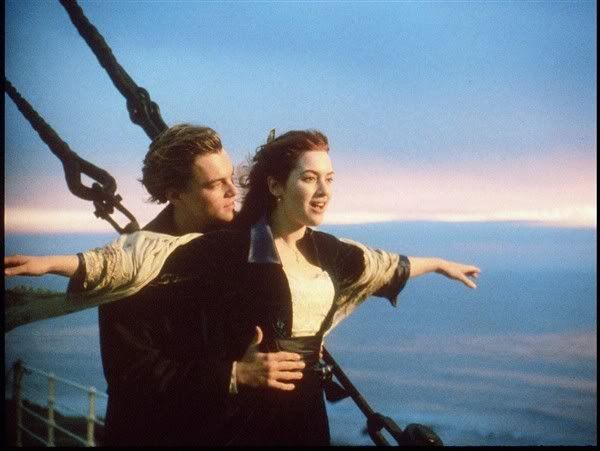
This is an example of a mid shot used in the film Titanic directed by James Cameron. This shows the events going on from a distance but much closer than the long shot, only showing what we want the audience to see.

Close Up (CU)


This is an example of a close up shot from the film Batman directed by Christopher Nolan showing just the face of the enemy. A close up shot is when we want to see the reaction of someone through facial expression to the events which are happening, have just happened or are about to happen. It emphasizes their emotion.

Extreme Close Up (ECU)


This is an example of an extreme close up shot from the film Harry Potter. An extreme close up shot is too close to see general reactions or emotions however it is used widely during dramatic scenes, and also to show eye contact between two of the characters. 

Point Of View (POV)


This is an example of a point of view shot, which is where we see the scene from one person's perspective. This makes us feel close to the character and almost gives the audience an emotional connection with them, almost making us relate to them and put ourselves in their shoes.

Low Angle Shot (LAS)


This is an example of a low angle shot which creates a sense of power. This makes the person in the camera seem tall, dominant and strong, usually making the audience feel intimidated.

High Angle Shot (HAS)


This is an example of a high angle shot, which isn't as extreme as a birds eye view, however it makes the person in the camera look insignificant, small and weak. 

Pan


This is a camera shot where the camera is moving horizontally to the left or the right, usually following someone who is walking in a video or film.

Tilt


This is another camera shot which is where the camera moves horizontally, however this time the camera moves up or down. This is usually found at the beginning or the end of a new scene.

Craneshot


The craneshot movement is usually used at the beginning or the end of a movie, showing the place and area the film is set in, and is when the camera is on a crane in the air, showing high angle views of characters and people.

Tracking Shot


A tracking shot is used with a camera dolly, so the camera is able to move steadily without moving and causing the image to be bumpy and unclear. This shot is used to film walking, fighting and many other scenes.

Hand Held Shot

This hand held shot can be used at the same time as a POV shot, however it doesn't always have to be. It is when the camera is held by hand and the image is very unclear and bumpy, which can create a sense of unease, tension and also panic. This presents real life because this is what we would see as the character who may be running or walking very fast. 

Thursday, 6 December 2012

Mise-en-scene

Mise-en-scene

Mise-en-scene is the arrangement of everything which appears in a frame including light, colour, props, decor and costume. 

The lighting can be either high-key or low-key, high-key highlighting beauty and facial features, low-key creating a dark mysterious affect with lots of shadowing which is often used in thrillers and horror movies.
The color can be in color or in black and white, black and white also creating a mysterious effect, and color can create vibrant happy scenes.
Costume can determine our first judgement of a character and can also tell us who the character is and what part they are going to play.


This is a picture of nature which is bright nd this creates a happy mood.
This is another image of nature but it is in dark colour and this creates a threatening, intimidating mood.

Saturday, 1 December 2012

Alfred Hitchcock

Alfred Hitchcock


'If its a good movie the sound could go off and the audience would still have a perfectly clear idea of what was going on'

'Always make the audience suffer as much as possible'

Sir Alfred Joseph Hitchcock was born on the 13th August 1899 in Leytonstone and is an English film director. His films were mostly suspense and psychological thrillers. He was known as 'Hitch' or 'The master of Suspense' due to this. 
He was bought up with William Hitchcock, his older brother, and Emma Jane Hitchcock, his older sister, and was raised as a Catholic. When he was 5, he was sent by his father to the police station with a note asking them to lock him away for five minutes to punish him for behaving badly. Being harshly treated and punished is reflected in his films. Hitchcock was rejected in the First World War by the military due to being overweight, having a glandular condition and his fathers death. 

Some of Hitchcock's films are:

Psycho, The Birds, Rear Window, Vertigo, North by Northwest, Dial M for Murder, Rope.


Tuesday, 27 November 2012

Recipe of a Thriller.


'The thriller is a very difficult genre to pin down because it covers such a wide range of films. Thrillers are films of suspense...that are supposed to instil terror into the audience.' Susan Hayward, Key Concepts in Film Studies.

In class we discussed what a thriller is and this is what we came up with. 

Thriller is a broad genre of literature, film and television that includes numerous and over-lapping genres such as action and romance. 
They are characterized by fast pacing, frequent action and resourceful heroes who must thwart the plans of more powerful and better equipped villains. For example spiderman and the green goblin. 
Suspense, red herrings and cliff hangers are used in thrillers.Psychological, social and political tensions are included in a thriller which can catch the attention of the audience and the genre is very flexible. The hero must thwart the plans of a villain rather than uncover a crime that has already happened and the identity of the villain is known all along. The crimes that must be prevented are serial or mass murder, terrorism, assassination, or the overthrow of governments. The hero often saves his own life and the lives of others. 

An action thriller is when there is a race against the clock and includes extreme amounts of violence and an obvious antagonist. They include weaponry such as guns and explosions. Examples of this are the James Bond films and The Transporter.

A conspiracy thriller is when the hero confronts a group of large and powerful enemies who's true extent only he or she recognizes

A crime thriller is when the film is focused on the criminal(s) and usually emphasize action on psychologist aspects using murders, robberies, chases, shootouts and double-crosses. Reservoir Dogs is an example of a crime thriller.

A spy thriller is when the film is focused on a certain mission for the good guy and the bad people trying to stop them get to what they want or need through captivation and many other things. Examples of this include The Bourne Legacy, Mr and Mrs Smith and the James Bond films. 

Political thrillers are ones which involve the government and can include The Last King of Scotland.


Saturday, 17 November 2012

Where Were You? Sound Shots

Sound Shots

Where Were You?

This is a video made by myself Tania Begum and Ashleigh Westcott starring Tania and Taylor-Anne Corney. We used the microphones to capture sound and experiment with it.  


This video has diegetic sound, which means that it is coming from a source on film which is relevent to the events happening.

Tuesday, 13 November 2012

Camera Shot Exercise


Camera Shot Exercise

A Lovers Tiff

Myself, Tania Begum and Ashleigh Westcott filmed a short movie using different camera shots including over the shoulder, low angle, high angle etc. 


Evaluation.

We was asked to create a short video displaying some of the camera shots we learnt about in class. I worked with Tania Begum, who worked with me at directing, and Ashleigh Westcott, who starred in the video, and also Georgia Meakin who starred in the video. As our first video we hadn't really planned what it would be about when we began videoing, so we put our ideas together as we went along and this is what we created. We shot this film in Robert Clack lower school and I believe that we worked very well as a group. I believe that the final edit has turned out quite good. After shooting it we edited it through cutting out parts that we didn't need or want and blending camera shots together. We also slowed down the image to fit in with the audio we desired which is feels like home by Edwina Hayes. I believe that this fitted in well with this short drama and the final edit has turned out pretty good.

This video has non diegetic sound with music.

Monday, 5 November 2012

Psycho by Alfred Hitchcock.

Psycho.


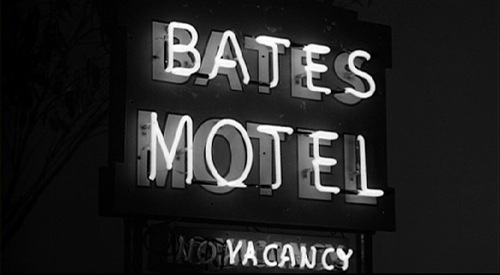
This is a thriller about a woman, Marion Crane, who has stolen some money from her company and ran away. She comes across Bates Motel and meets Norman Bates, the owner of this rundown, solitary and unseen motel. She is murdered in the shower by his mother and he dumps her in the boot of her car in a river and claims that she never stayed to the detective who comes looking for her after she's been missing for a few days. He then gets caught out because she signed into a check-in book and reveals that she did stay however he says that they never spoke she just went to her room and left the next morning. His mother was meant to have died and she killed the private detective because hes seen her in the window. The sister and the boyfriend of Marion got police involved, telling them the whole story, and when they passed it off as though the detective had ran away with Marion they went to investigate at the hotel. There is a big twist at the end of this movie which I believe is very well though of by Hitchcock and makes the film very interesting.


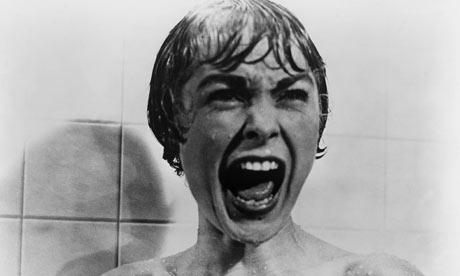
In the shower scene we have a close up of Marion and in the background the curtain with a shadow. This shadow represents a musky figure, only the outline so we see no detail of a person. This creates tension and a thrilling image. There is the sound of running water, which is a diegetic sound representing the shower, which is a calm and relaxing. Then we have a non-diegetic sound of spine chilling music when the figure opens the curtain to reveal a woman with a knife in her hand. This creates a sense of danger. The characters facial expression is shown in this image and shows terror. 


Norman Bates is given a freaky look to match the characteristics of him. The character is given this gruel smile which makes us feel uncomfortable and uneasy, which is also what he seems to be when we first meet him at his Motel. 

I believe that this film is a very good one and is one of Hitchcock's finest, certainly the most thrilling. 


Saturday, 27 October 2012

North by North West by Alfred Hitchcock

'North by North West'


North by North West is a film made by Alfred Hitchcock in 1959. This is a thriller about an advertising man who is mistaken for someone and is chased around the country by Foreign spies and police due to him also being framed for a murder. I believe this film was very good and there are many effects used in each scene to create tension and mystery. 

Hitchcock uses establishing shots to show an overview of an event happening such as at the beginning of a scene to set it. this allows the audience to see what is going on and where we are. He also uses the reverse shot pattern which is showing the face of the character up close. Hitchcock uses this shot because a master shot would cause the audience to feel more distant from what is happening and therefore less involved. 

Hitchcock also presents the characters in different ways using contrapuntal dress. For example when Madison Avenue is portrayed as an innocent character she is dressed in white, and when she is portrayed as someone on the enemies side she is dressed in black and dark colours.

I really enjoyed this film and believe that it is one of Hitchcock's finest; each scene left me in suspense and the twist at the end when we find out who Madison really is really shocking. 


Sunday, 21 October 2012

The Birds by Alfred Hitchcock.

I have been watching a film called 'The Birds' in Media Studies and this was by Alfred Hitchcock released in 1963. I didn't get to watch all of it and I only saw the ending, however I believe that the story line was quite good.
 The sound of distant birds were used during silent parts to create tension and this is a diegetic sound but off screen. 


This image shows that when the birds attacked her she was trapped in a room which causes us to become tense and unaware until they begin pecking away at her. This camera shot lets us view all of her with a bird in the corner and this shows us fully the damage they have done to her and gives us a warning that they haven't finished yet. There is also a shadow of a bird facing toward her which causes more tension to be built up as we don't know what is going to happen next, and this shadow may suggest another attack. The light she is holding suggests that the room she is in is dark and she is unable to see without it. 

Alfred Hitchcock did not want this film to be colorful and used an area with low land, no mountains and not many trees in order to be able to shoot the birds through good camera angles. He subdued color in many of the scenes in order to get a good effect and this created a gloomy, tense atmosphere, which he desired. 


The sound of children singing is normal in every day life. In the school scene, after an establishing shot of the birds in the sky and the normal sounds, and the camera shots are cut between Melanie (the main character) looking relaxed and the birds on the climbing frame, where there are five or more now perched. This creates suspense and a sense of danger. When Melanie rushes to the school, a high angle long shot is used and this makes her look very vulnerable. 

Unnatural sounds are used in this film throughout, and the only diegetic sounds which are relevant to the goings on in the film are when the birds are squawking. Silence is also used to make the audience feel very uncomfortable and create tension.  

Hitchcock used color through the fires flames to create a terrifying, fiery atmosphere through orange and yellow. The end of the film is mainly in black and white which creates yet again a gloomy atmosphere. 

Wednesday, 17 October 2012

Introduction to my thriller blog.


Hey guys I'm Lucie and this is my blog for my thriller work. This will contain all of the work leading up to my creation of a thriller movie. In media studies we have been discussion camera shots, lighting, sound, editing and effects. We are watching films and my blog will contain some reviews about them where I will comment on some of the different effects used. 
I think media studies is a good subject and will help me in future life if I wish to become involved in journalism which is a course I may wish to take. I enjoy it very much.