Camera Shots
There are many different types of camera shots used in a film or video. We don't just see the whole thing from one angle or point of view, we see it from many different ways.
Long Shot (LS)

This is an example of a long shot, showing everything you need to see in the scene from a distance.
Medium/Mid Shot (MS)
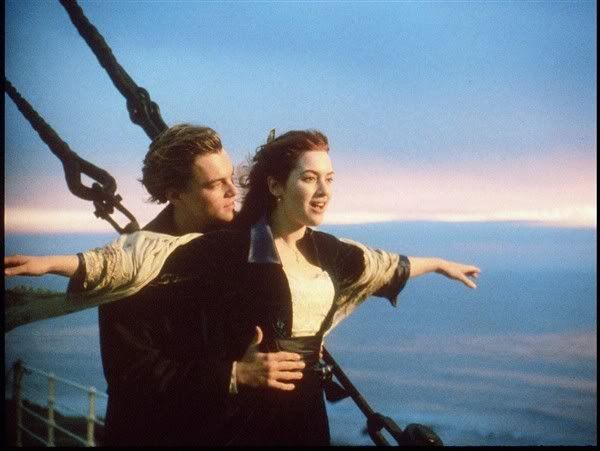
This is an example of a mid shot used in the film Titanic directed by James Cameron. This shows the events going on from a distance but much closer than the long shot, only showing what we want the audience to see.
Close Up (CU)
This is an example of a close up shot from the film Batman directed by Christopher Nolan showing just the face of the enemy. A close up shot is when we want to see the reaction of someone through facial expression to the events which are happening, have just happened or are about to happen. It emphasizes their emotion.
Extreme Close Up (ECU)

This is an example of an extreme close up shot from the film Harry Potter. An extreme close up shot is too close to see general reactions or emotions however it is used widely during dramatic scenes, and also to show eye contact between two of the characters.
Point Of View (POV)

This is an example of a point of view shot, which is where we see the scene from one person's perspective. This makes us feel close to the character and almost gives the audience an emotional connection with them, almost making us relate to them and put ourselves in their shoes.
Low Angle Shot (LAS)

This is an example of a low angle shot which creates a sense of power. This makes the person in the camera seem tall, dominant and strong, usually making the audience feel intimidated.
High Angle Shot (HAS)

This is an example of a high angle shot, which isn't as extreme as a birds eye view, however it makes the person in the camera look insignificant, small and weak.
Pan
This is a camera shot where the camera is moving horizontally to the left or the right, usually following someone who is walking in a video or film.
Tilt
This is another camera shot which is where the camera moves horizontally, however this time the camera moves up or down. This is usually found at the beginning or the end of a new scene.
Craneshot
The craneshot movement is usually used at the beginning or the end of a movie, showing the place and area the film is set in, and is when the camera is on a crane in the air, showing high angle views of characters and people.
Tracking Shot
A tracking shot is used with a camera dolly, so the camera is able to move steadily without moving and causing the image to be bumpy and unclear. This shot is used to film walking, fighting and many other scenes.
Hand Held Shot
This hand held shot can be used at the same time as a POV shot, however it doesn't always have to be. It is when the camera is held by hand and the image is very unclear and bumpy, which can create a sense of unease, tension and also panic. This presents real life because this is what we would see as the character who may be running or walking very fast.
Hand Held Shot
This hand held shot can be used at the same time as a POV shot, however it doesn't always have to be. It is when the camera is held by hand and the image is very unclear and bumpy, which can create a sense of unease, tension and also panic. This presents real life because this is what we would see as the character who may be running or walking very fast.

No comments:
Post a Comment